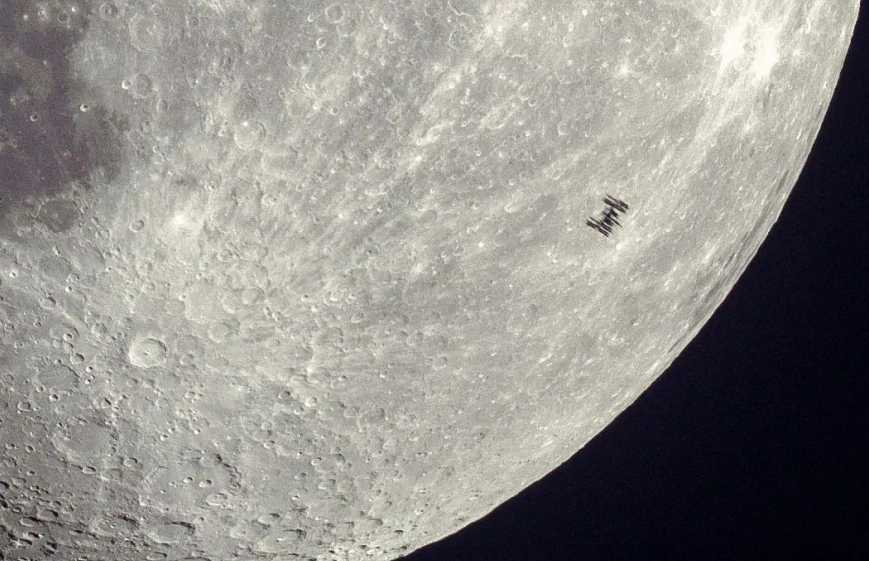
The Mysterious Spot on the Moon: It's the International Space Station
What caused that strange spot on the Moon? The answer is the International Space Station (ISS). In 2019, this orbiting space platform was precisely captured in front of a crescent Moon. Taken in Palo Alto, California, the featured photo used a 1/667-second exposure, while the ISS took about half a second to cross the lunar face.
1 minute read
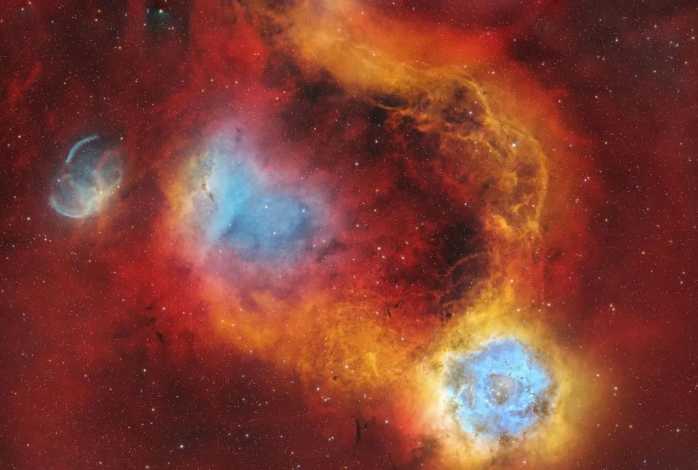
The Real Rosette Nebula: Unveiling Cosmic Petals in Monoceros
Is that red petal-like cloud the Rosette Nebula? The famous Rosette Nebula actually lies in the lower-right of this image, appearing blue-white and connected by golden filaments to other nebulae. The central upper "petals" are a visual mimic—true cosmic blooms reveal themselves in this deep-sky close-up, where infrared red exposures unlock hidden floral structures around NGC 2237.
1 minute read
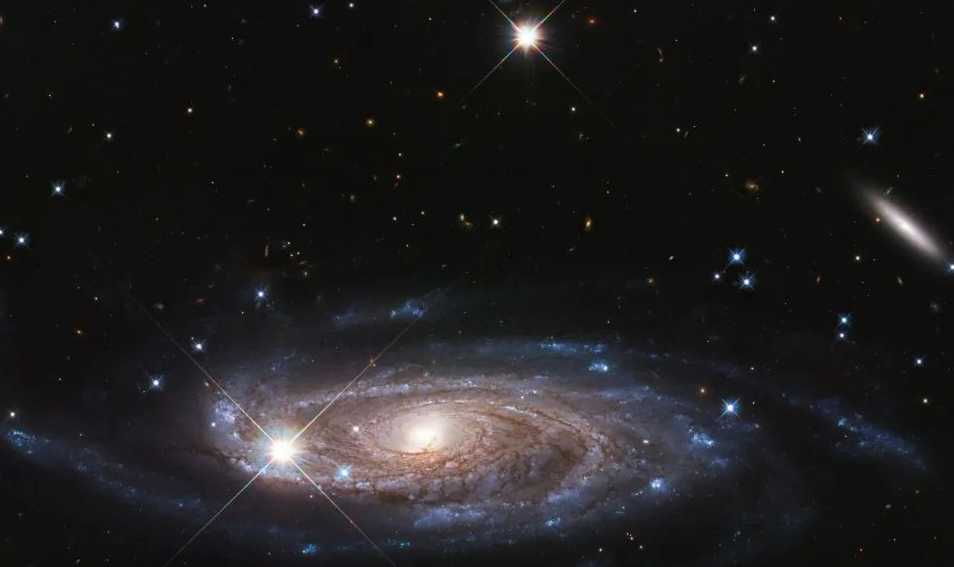
UGC 2885: The Colossal Galaxy 800,000 Light-Years Across
In this Hubble Space Telescope image, foreground stars with bright stellar spikes in Perseus lie within the Milky Way, while the focus reveals UGC 2885—a giant spiral galaxy 232 million light-years from Earth. Stretching 800,000 light-years (eight times the Milky Way’s diameter), it hosts nearly 100 trillion stars—10 times our galaxy’s population—making it a pivotal case study for how galaxies achieve colossal sizes.
1 minute read
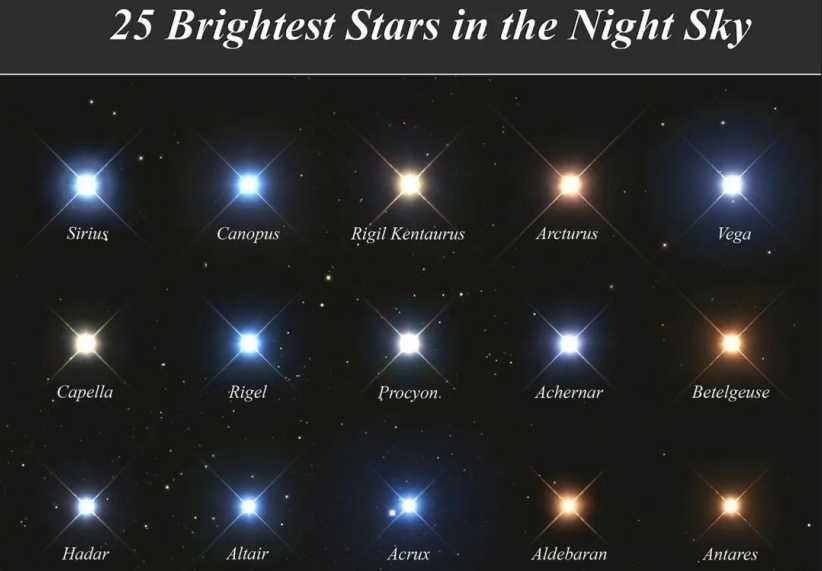
The Brightest Stars in the Night Sky: IAU-Named Icons and Their Ancient Tales
For millennia, humanity has named the brightest stars, weaving their light into myths and calendars. Today, the International Astronomical Union (IAU) standardizes these names to unite global science, but each moniker still holds cultural treasures. Here’s a journey through the 25 brightest stars—by apparent magnitude—with their IAU-designated names and the stories behind them.
2 minute read
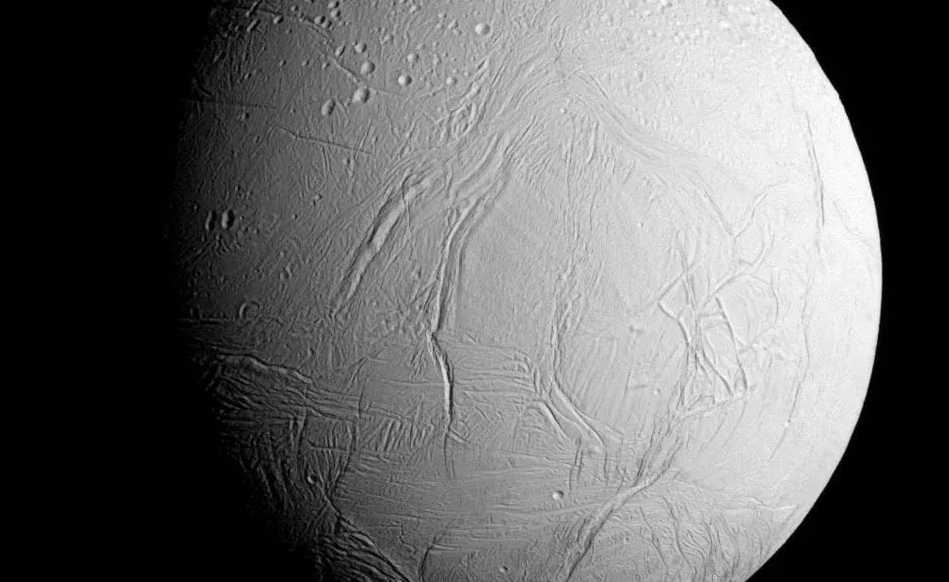
Saturn’s Enceladus: Does an Ocean beneath Ice Harbor Life?
Enceladus, Saturn’s icy moon, harbors a subsurface ocean beneath tiger-stripe fractures that erupt icy particles into space. These geysers form a dense ice cloud over the south pole, feeding Saturn’s faint E ring. The Cassini spacecraft (2004–2017) provided definitive evidence, capturing this true-color, high-resolution image during a close flyby, revealing shadowed ice chasms and active vents.
1 minute read
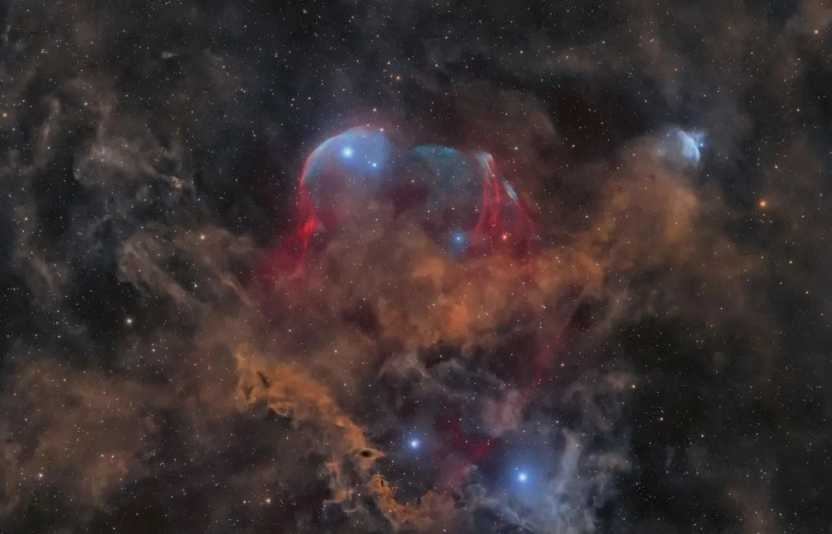
First-Ever Capture of Supernova Remnant G115.5+9.1: A Cosmic Duo Named After Mythological Monsters
A team of amateur astrophotographers has uncovered the faint remains of a long-dead massive star, capturing the first image of supernova remnant G115.5+9.1—dubbed "Scylla"—in the constellation Cepheus (the Ethiopian king of myth). The discovery, hidden in sky survey data, reveals a glowing patch where hydrogen atoms emit red light and oxygen atoms shine in faint blue, marking the aftermath of a stellar explosion that likely occurred thousands of years ago.
1 minute read
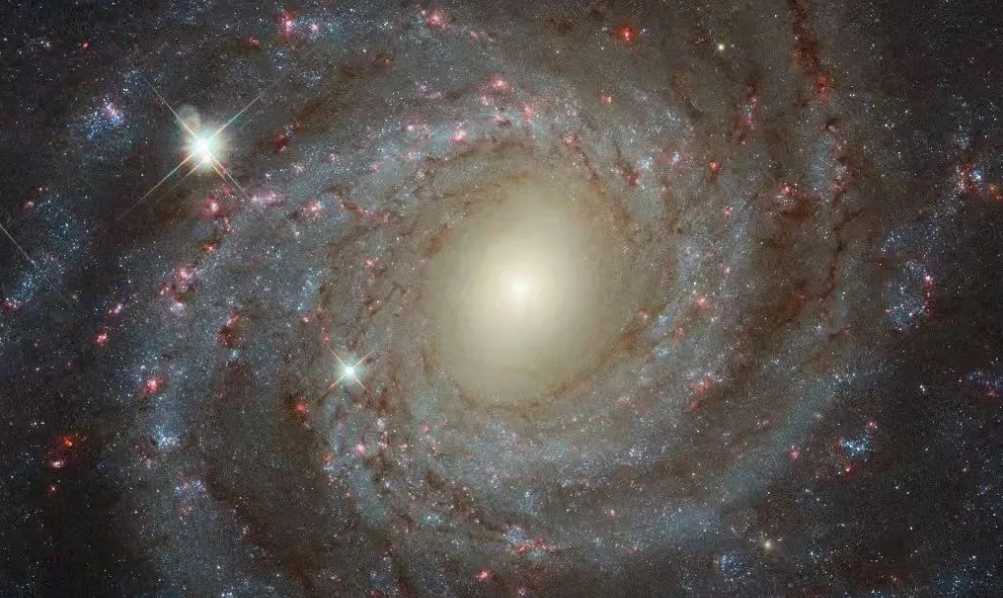
NGC 3344: A Face-On Spiral Galaxy Unveiled in Hubble’s Multispectral Glow
The grand spiral galaxy NGC 3344 presents its full face to Earth, a 40,000-light-year-wide cosmic pinwheel in Leo Minor just 20 million light-years away. This Hubble Space Telescope multispectral close-up—spanning ultraviolet to near-infrared wavelengths—reveals exquisite details across 15,000 light-years of its central region, laying bare the galaxy’s lifecycle in living color.
2 minute read
The Veil Nebula: Cosmic Relic of a Supernova That Lit the Ancient Sky
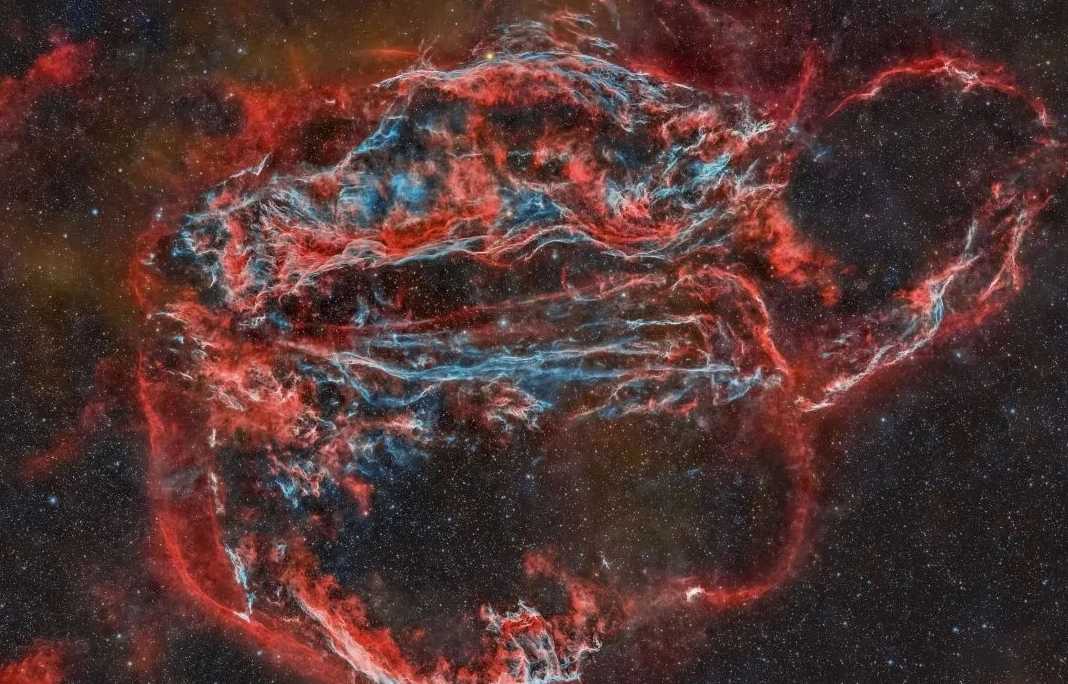
These ethereal wisps are the last observable remains of a star that perished in a supernova explosion ~7,000 years ago, giving birth to the Veil Nebula. When the star detonated, its expanding gas cloud shone as brightly as a crescent Moon, lingering in Earth’s sky for weeks during humanity’s prehistoric era. Today, this supernova remnant—known as the Cygnus Loop—has faded, visible only through small telescopes pointed at the constellation Cygnus.
1 minute read
HH 24: The Cosmic 'Lightsaber' Jet from a Newborn Star in Orion
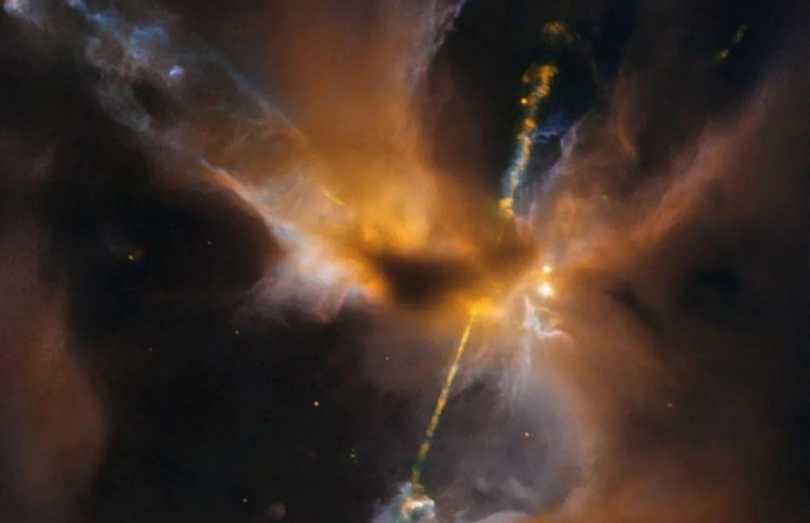
Resembling a double-bladed lightsaber, this stunning Hubble Space Telescope image captures Herbig-Haro 24 (HH 24)—a half-light-year-wide jet erupting from a newborn star in the Orion B molecular cloud complex, ~1,300 light-years (400 parsecs) from Earth. HH 24 exemplifies the violent beauty of star birth, where invisible forces carve luminous pathways through interstellar space.
2 minute read
The Milky Way’s Most Beautiful Portrait: A 17-Hour Exposé of Cosmic Splendor
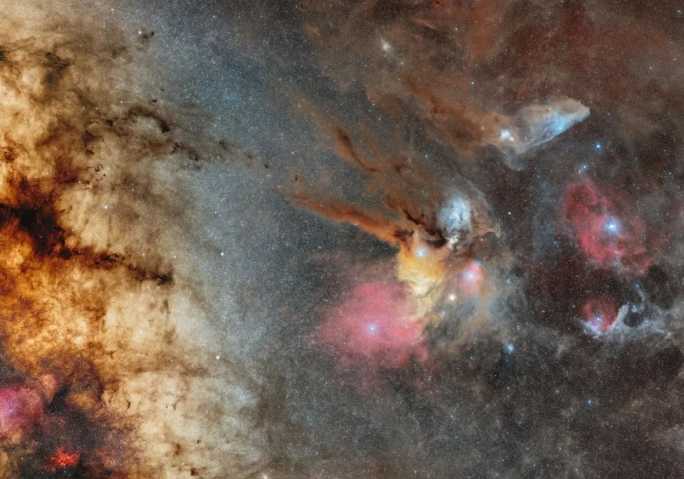
Stargazers and astrophotographers alike hail this deep-sky masterpiece as the Milky Way’s most stunning portrait. The image anchors viewers with a diagonally streaming galactic band in the lower-left, intersecting the vibrant Rho Ophiuchi Nebula at its center. Above, the dazzling red nebula of Zeta Ophiuchi floats like a cosmic flame, creating a triad of celestial wonders.
1 minute read
Webb’s Infrared Eye Unveils Secrets of Spiral Galaxy NGC 2566
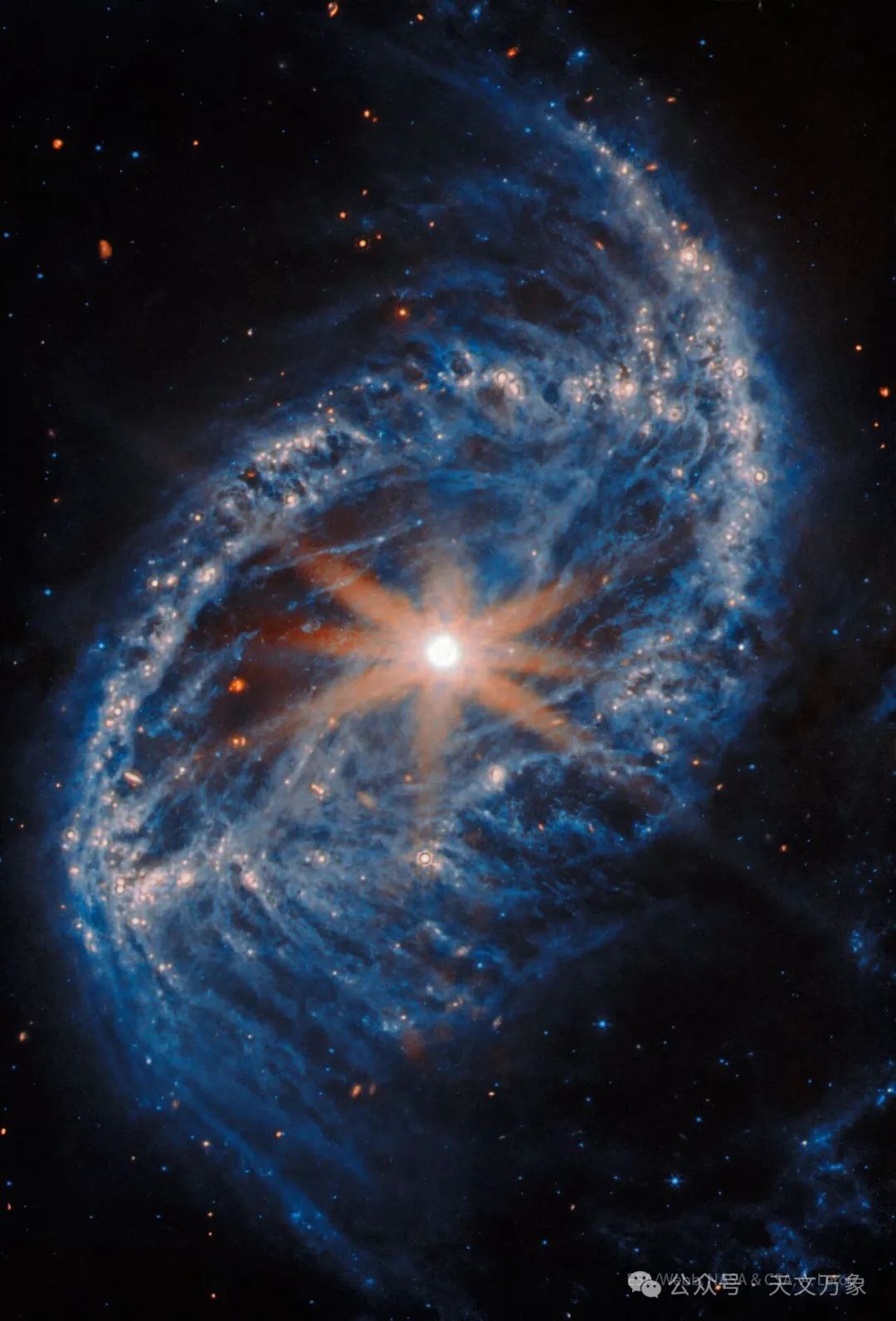
In this infrared portrait from the James Webb Space Telescope, the core of spiral galaxy NGC 2566 reveals cosmic mysteries—starting with the eight radiating spikes at its center, which aren’t astrophysical features but diffraction spikes from the telescope’s support structure. Though the bright core shows no signs of active galactic nuclei, dynamical calculations suggest a supermassive black hole of millions of solar masses lurks within, currently in a low-activity state.
2 minute read
Jupiter’s Cosmic Wonders Unveiled by Juno: From Swirling Clouds to a Mysterious Core
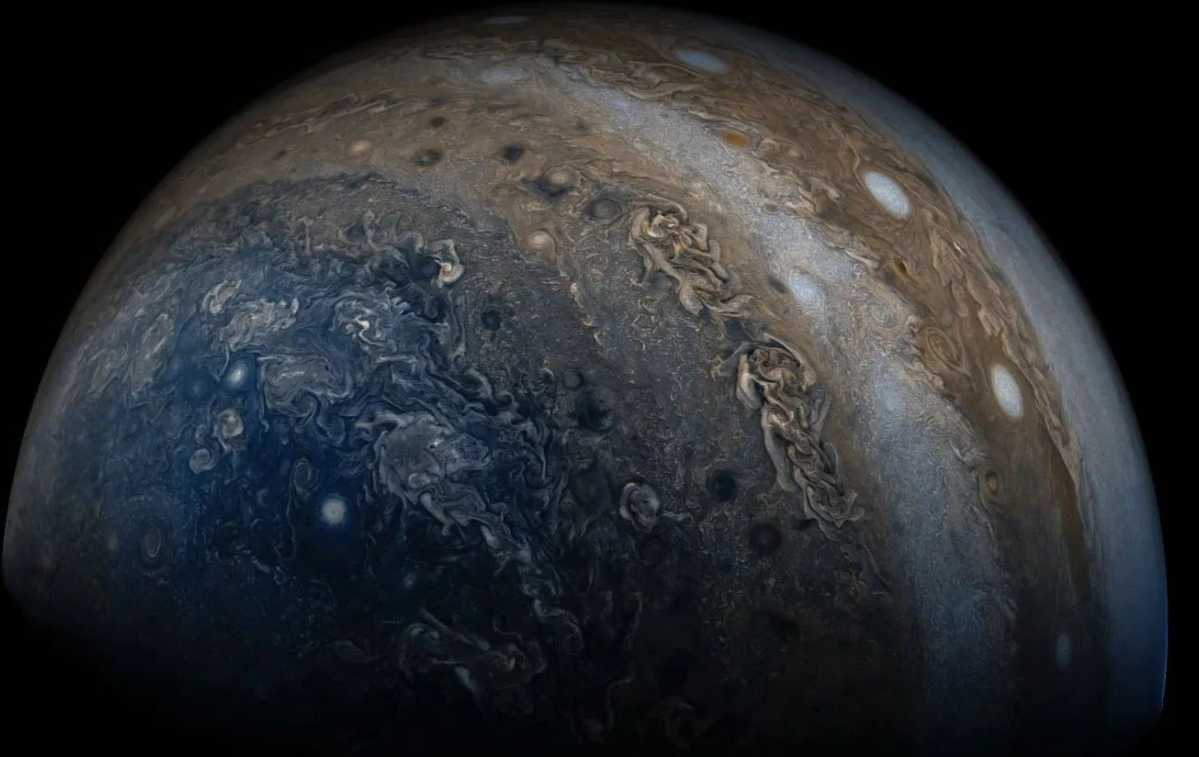
NASA’s Juno spacecraft, on its highly elliptical orbit around Jupiter, has completed over 70 close flybys, revealing the gas giant’s secrets. A 2017 image captured from below Jupiter’s equator shows horizontal cloud bands transforming into spectacular swirling vortices and intricate patterns, with a "string of pearls" array of white oval cloud formations near the equator. These views challenge all prior conceptions of Jupiter’s atmospheric dynamics.
1 minute read
NGC 6366: A Rare Globular Cluster Defying Galactic Norms Near the Milky Way’s Plane
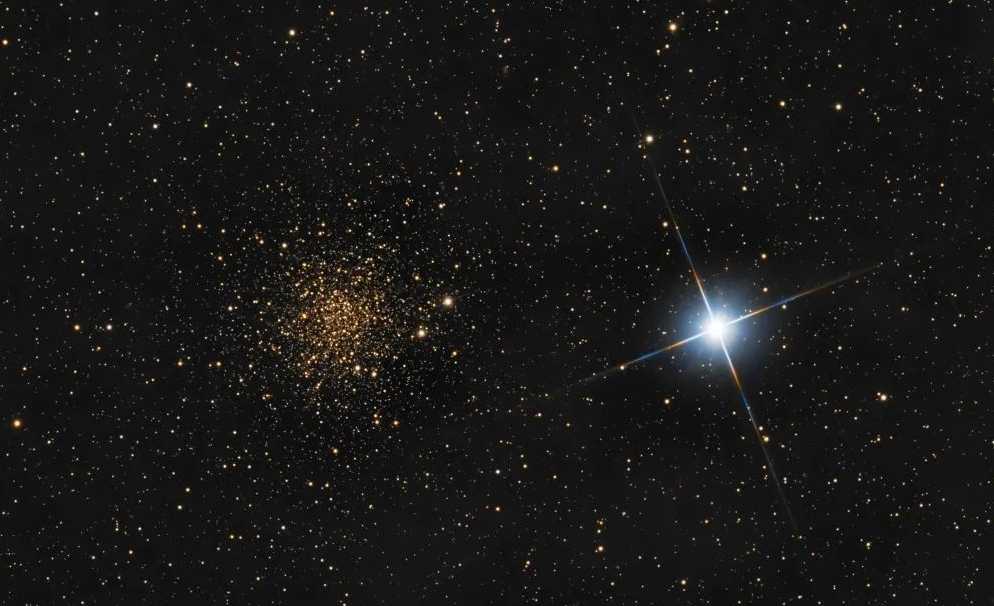
While most globular clusters orbit in the Milky Way’s outer halo, NGC 6366 stands out by lingering close to the galactic plane. Located ~12,000 light-years from Earth in Ophiuchus, the cluster’s starlight dims and reddens as it passes through interstellar dust—a phenomenon known as interstellar reddening. In this telescope image, NGC 6366’s golden stellar swarm contrasts sharply with the blue-white star 47 Ophiuchi, just 100 light-years away and visible as a bright point near the cluster’s edge.
2 minute read
M63 (The Sunflower Galaxy): A Cosmic Sunburst in Canes Venatici
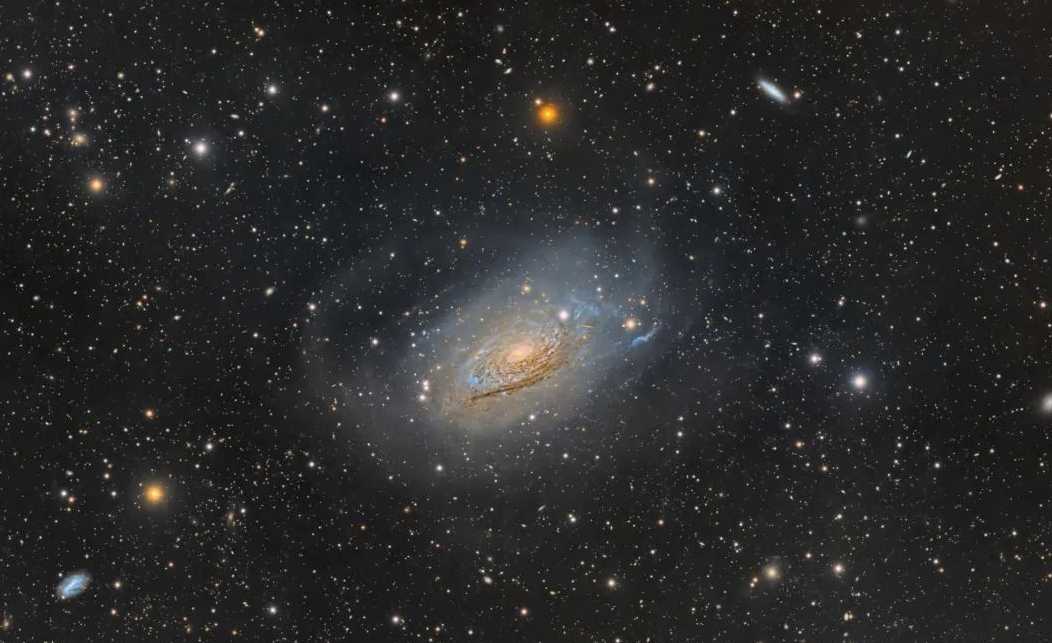
The bright spiral galaxy M63 (NGC 5055) shines in the northern sky, a mere 30 million light-years from Earth in the constellation Canes Venatici ("the Hunting Dogs"). Spanning ~100,000 light-years—comparable to the Milky Way—its luminous core and grand spiral arms earned it the nickname "Sunflower Galaxy," a nod to its petal-like structure in deep exposures.
2 minute read
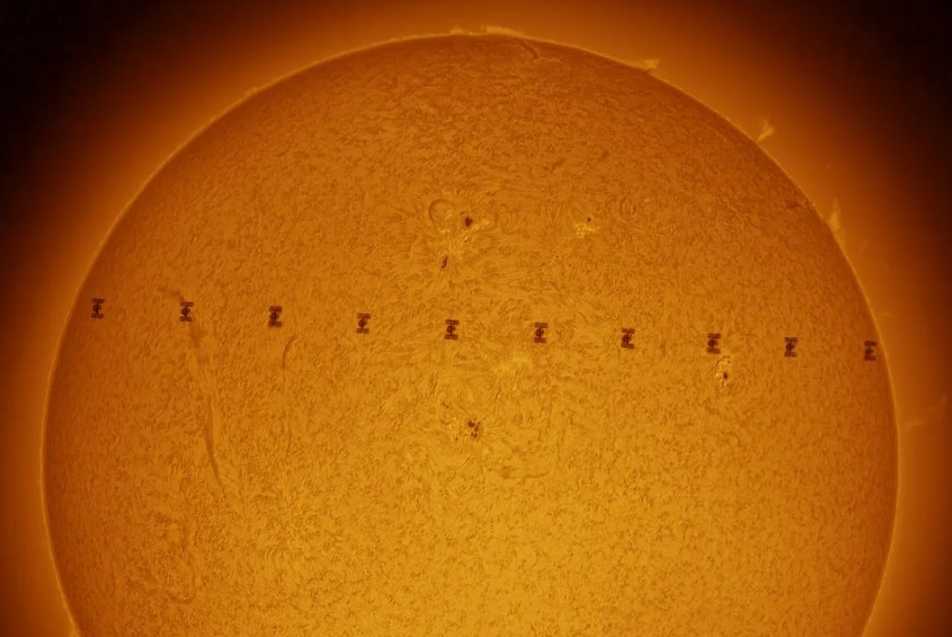
The International Space Station Transit: A Fleeting Solar Spectacle
When the International Space Station (ISS) streaks across the Sun’s disk at 8 km/s, its 0.8-second transit freezes human ingenuity and stellar dynamics on the same cosmic canvas. This rare phenomenon defies the ISS’s usual visibility—typically a bright speck in twilight—occurring only when orbital mechanics align the station, Earth, and Sun with precision.
2 minute read